A buyer-focused comparison of documented workflow scope, care-setting fit, and software-versus-service differences between athenaOne and MEDITECH Expanse, with special attention to the unanswered questions public materials leave open.
This comparison focuses on documented workflow scope, interoperability paths, and where the two vendors’ public materials answer different buyer questions—or leave them open.
eRAD’s public materials center on radiology workflow, remote reading, and DICOM transport. Fujifilm Synapse’s pages describe a broader enterprise imaging stack with cross-departmental PACS, VNA, cloud services, and viewer options. The real comparison is scope, not a simple feature race.
The public documents show two PACS products aimed at different operating models: eRAD centers its documents on web access, distributed reading, and workflow control, while Intelerad’s IntelePACS emphasizes cloud-first access, enterprise suites, and documented DICOM and HL7 interfaces. The documents,
Agfa frames Enterprise Imaging as a broader imaging platform with cloud, orchestration, and delivery options; Sectra frames PACS around radiology workflow with RIS availability varying by market. Public documents settle some workflow scope, but leave deployment fit and customer segment questions.
Epic’s public materials center federated interoperability, app connections, and cross-network exchange. MEDITECH Expanse frames itself around cloud-native workflow, mobility, and embedded AI. The real comparison is where each vendor documents stronger scope—and where public pages still leave buyer-s
Dragon Copilot is a Microsoft clinical assistant aimed at physician, nurse, and radiology workflows, while Suki presents a developer platform built around ambient documentation, dictation, form filling, and patient summary APIs. The public documents draw a clear software-versus-service split, but do
MEDITECH Expanse is documented as a health-system EHR with inpatient, ambulatory, AI, and interoperability depth, while Tebra’s EHR is documented for independent practices with charting, billing, telehealth, and patient engagement. The public record points to different buyer sizes, service models,
eClinicalWorks documents a cloud EHR centered on ambulatory documentation, practice management, and API access. MEDITECH Expanse is documented as a cloud-native EHR for organizations spanning acute and ambulatory settings, with mobile, AI, and enterprise workflow tools.
Both vendors document real interoperability paths, but they are not presented the same way. eClinicalWorks centers a broad cloud EHR with practice management, while ModMed separates proprietary and certified API paths across EMA and gGastro.
athenaOne and NextGen Enterprise both cover core EHR workflows, yet their public documents point to different buyer sizes, support models, and extension paths. The harder question is not which is broader, but which operating model fits the organization and what the public materials still do not say.
NextGen Enterprise centers on ambulatory enterprise workflows, Rosetta, Data Share, and patient APIs. Oracle Health EHR is documented as an enterprise-wide system across care settings, with broader role coverage, AI-assisted charting, and a different interoperability stack.
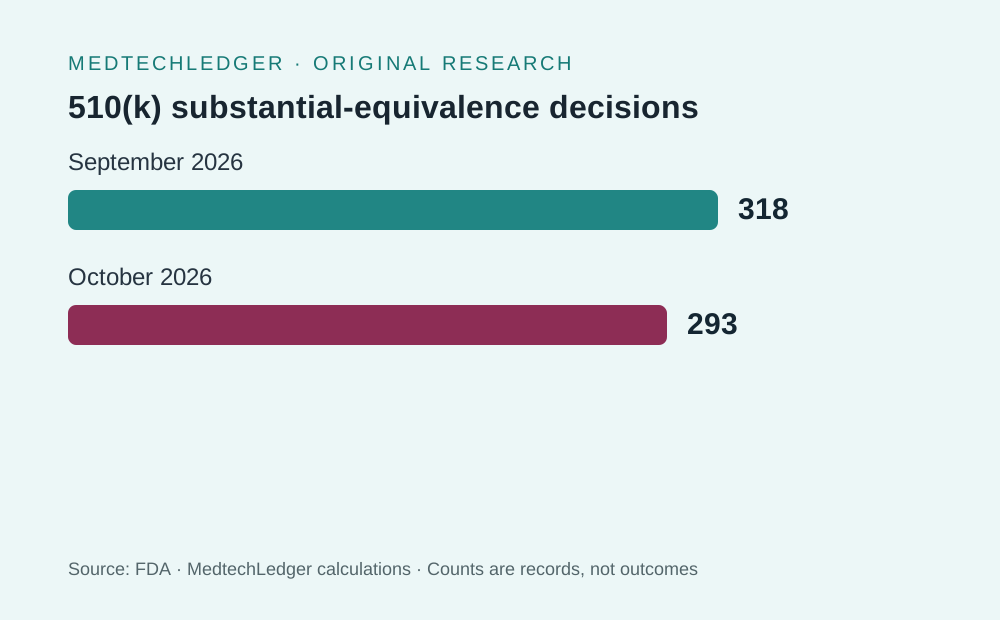
MedtechLedger’s decision-date query shows October 2026 had 293 SESE 510(k) clearances, down from 318 in September. Two DENG records in each month were De Novo grants, not clearances.
Public documentation shows both vendors support EHR workflows, but Epic’s materials center on federated customer-by-customer exchange while Oracle Health describes an enterprise-wide EHR with workflow and AI features. The public record does not settle deployment fit, migration effort, or which product is better for a given buyer.
Direct answer: clinical trial EDC query management is the loop that detects a data issue, routes it to the right reviewer, records the response, and closes it before database lock. The technical decisions are where the query is generated, who can open or close it, how exceptions are handled, and which metrics tell you whether the workflow is clearing real data issues or just creating noise.
A source-bound guide to what revenue cycle management software does, how major vendors frame the category, and what U.S. provider teams should compare before buying.